
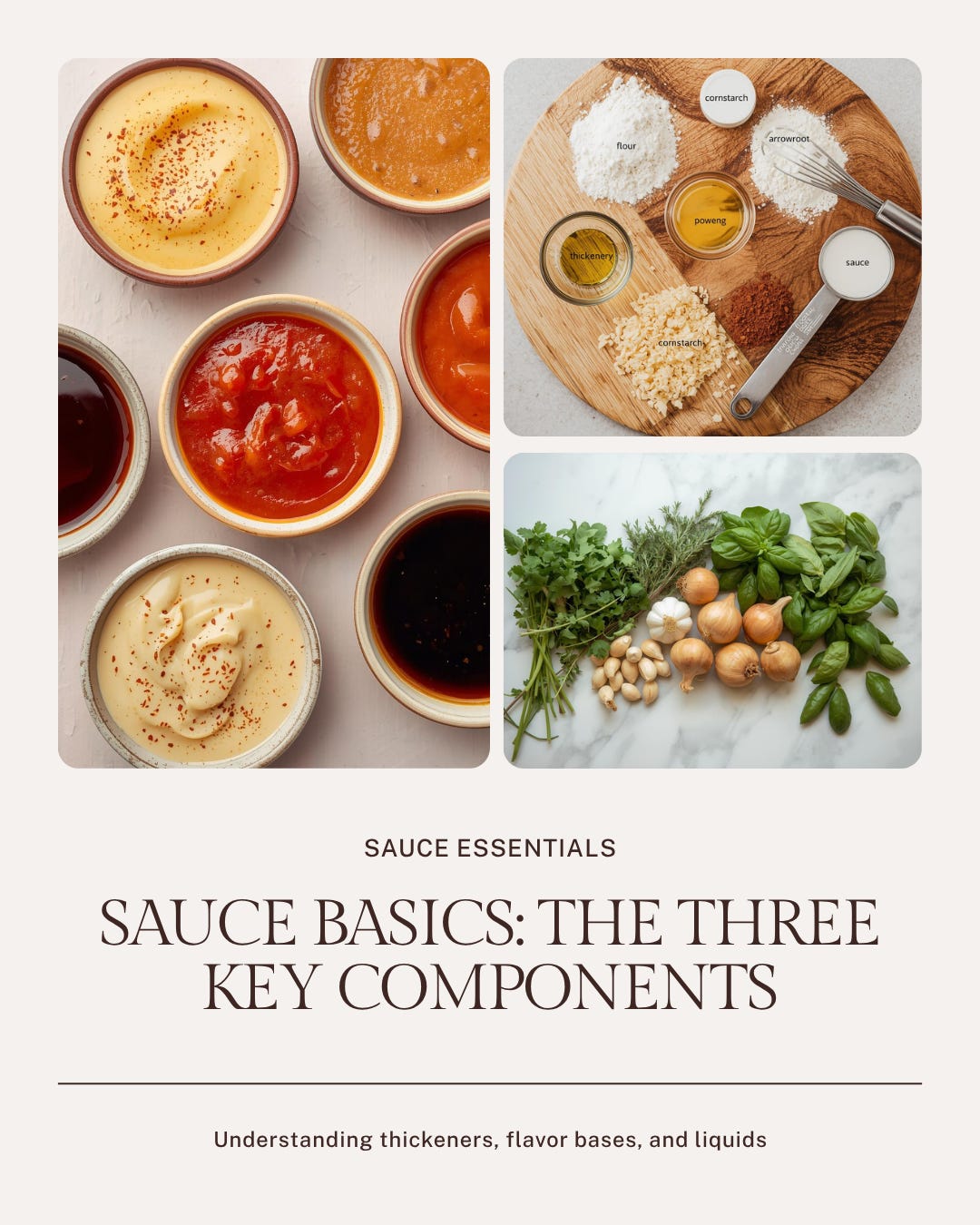
At its core, every classic sauce is made up of three key components:
1. The Thickener
This gives the sauce body and texture, turning it from a flavored liquid into a luscious, smooth coating. Common thickeners include:
Roux (equal parts flour and fat, cooked to varying levels: white, blonde, or brown)
Beurre manié (a kneaded mix of butter and flour)
Egg yolks (for emulsified sauces like hollandaise or custard-style sauces)
Cornstarch or arrowroot slurry
Reduction (concentrating by simmering without a thickening agent)
Purees (like beans or vegetables in modern sauces)
2. The Flavor Base
This is the soul of the sauce. It can come from:
Mirepoix (onions, carrots, and celery, classic for stocks and brown sauces)
Garlic, herbs, spices (thyme, bay leaf, rosemary, peppercorns)
Roasted bones or vegetables (for depth in brown sauces)
Aromatics like shallots, leeks, or infused oils
Tomato paste or wine for added richness or acidity
3. The Liquid
This forms the bulk of the sauce and carries the flavor. Typical liquids include:
Water (used in stocks and reductions)
Stock or broth (chicken, beef, veal, vegetable, fish)
Milk or cream (for white sauces like béchamel)
Wine, vinegar, or juice (for brightness or acidity)
Tomato purée or crushed tomatoes (in tomato-based sauces)
Bonus Tips:
Balance is key: The best sauces balance richness, acidity, and seasoning.
Season in stages: Add salt and acid gradually, it’s easier to add than fix.
Strain for elegance: A fine mesh strainer or chinois makes your sauce restaurant-smooth.
Mount with butter: A swirl of cold butter at the end gives shine and silkiness.